
Gillette Travel Shaving System
A two-week team project with Procter & Gamble exploring a compact premium shaving concept for travel.
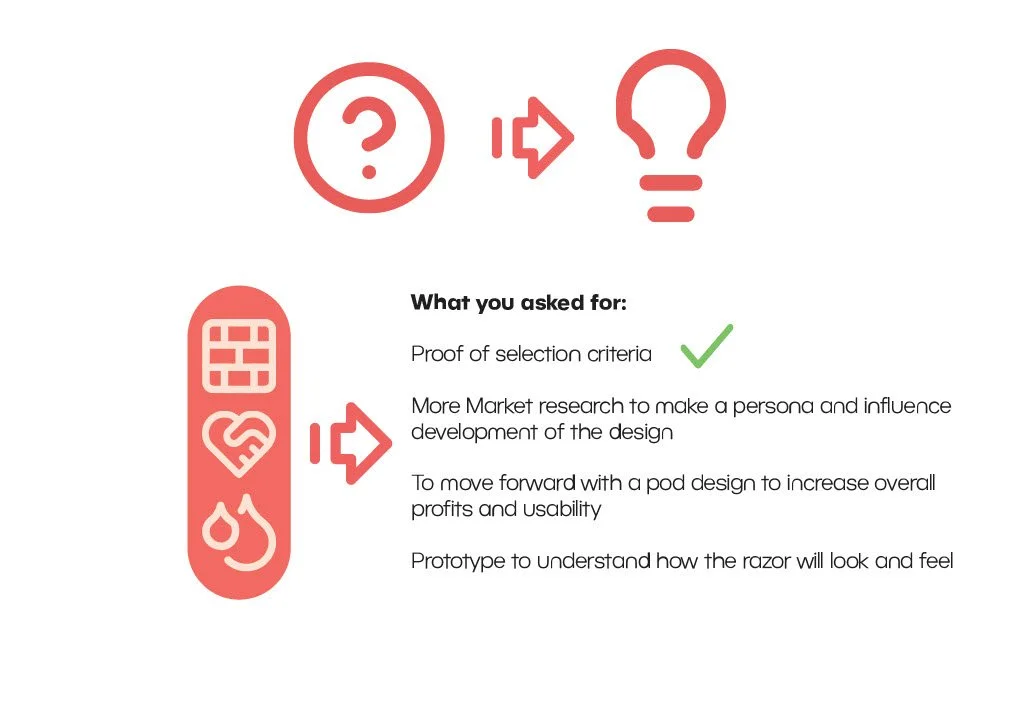
The concepts were compared against clear criteria, then refined through direct client feedback. This pushed the team towards stronger justification, more focused market research, persona work, and prototyping to test the direction physically.
Translating insight into requirements
Evaluation
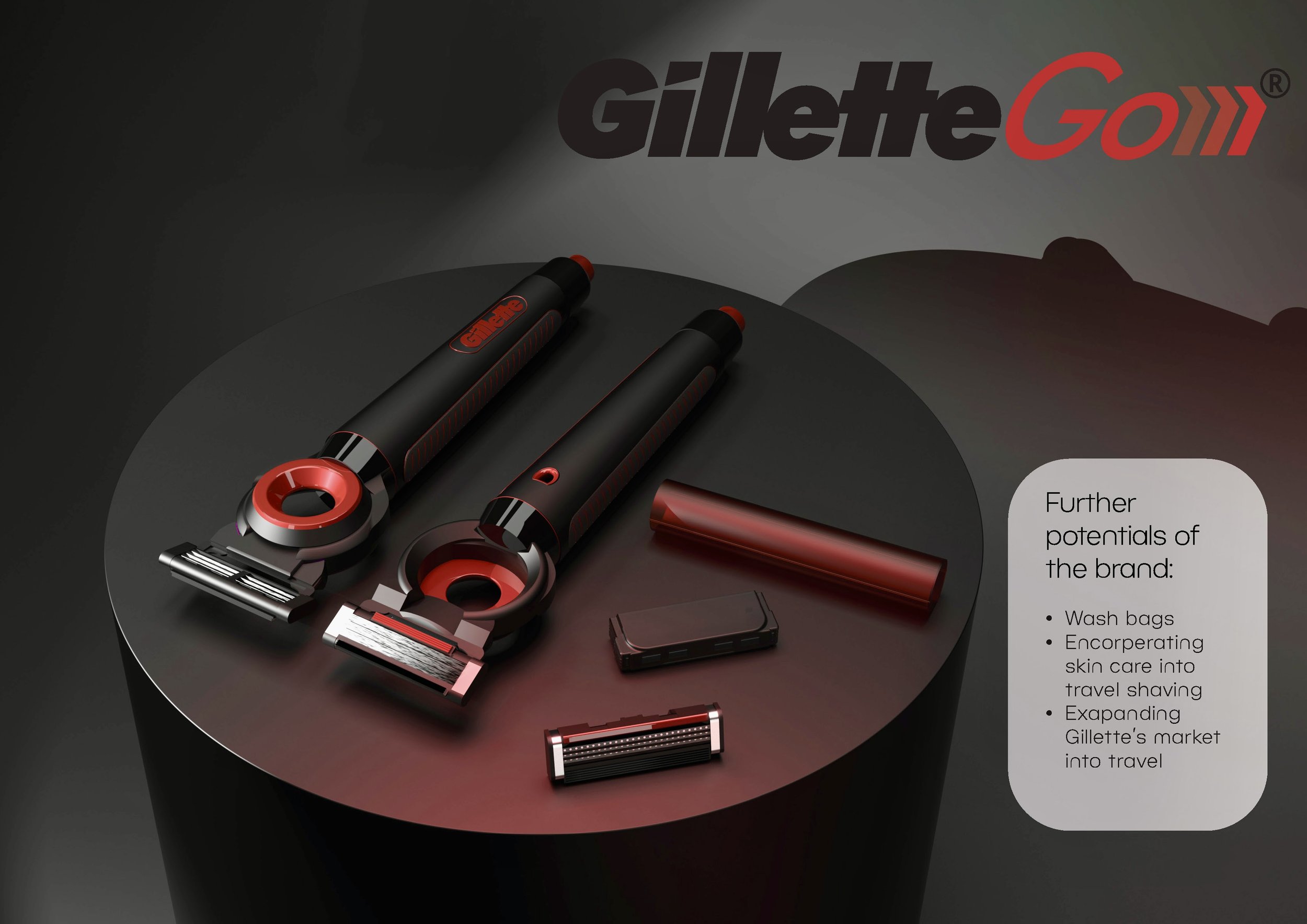
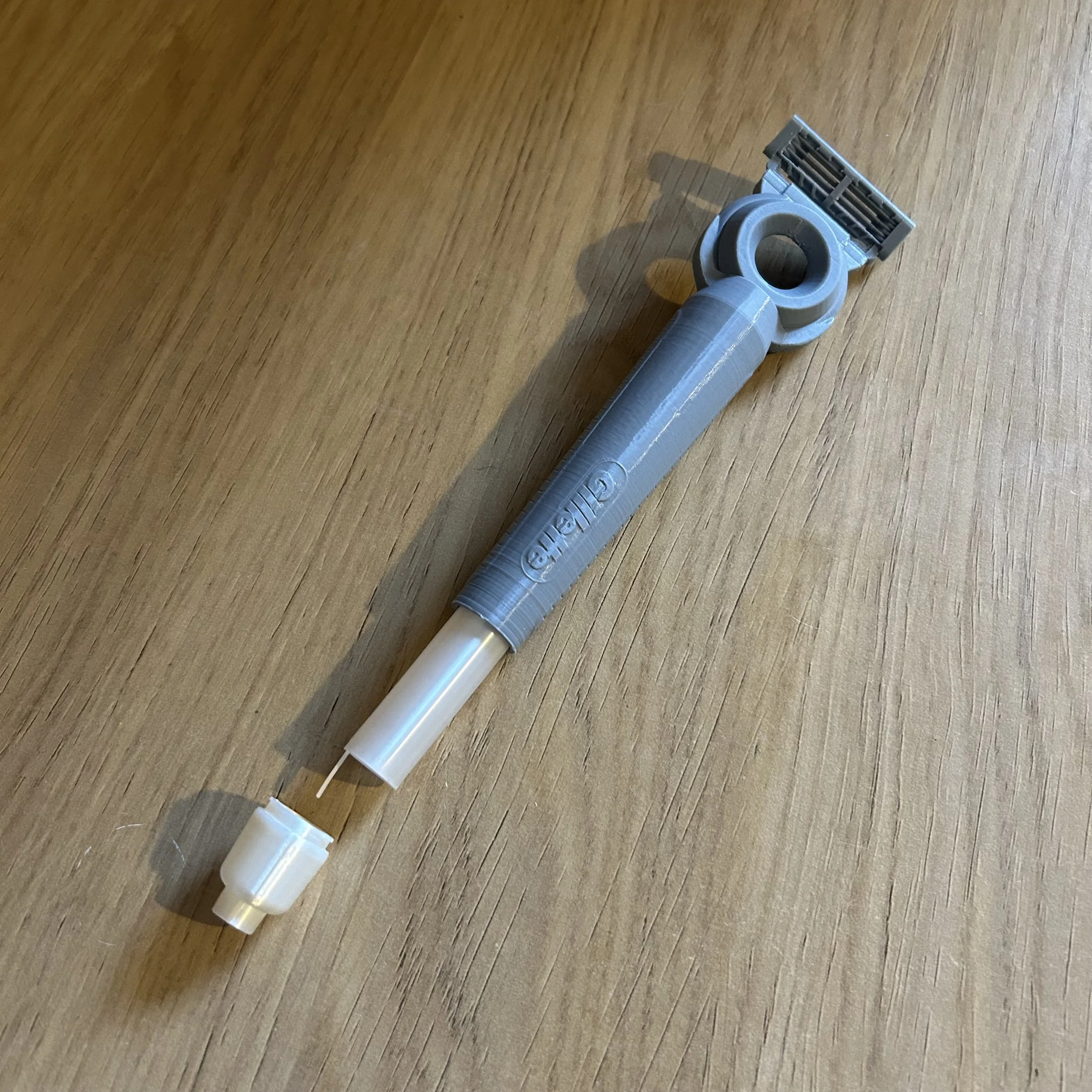
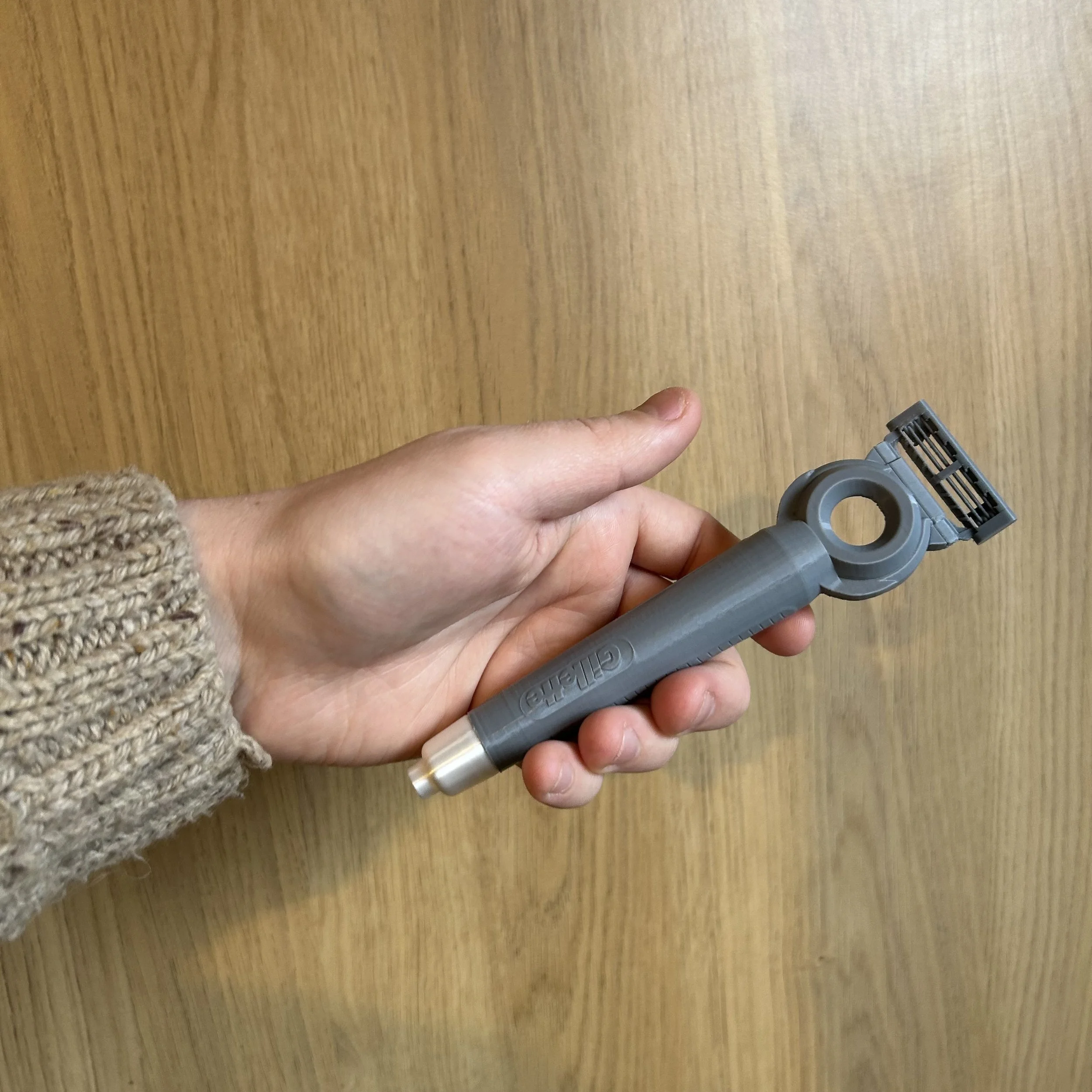
Prototype used in the presentation
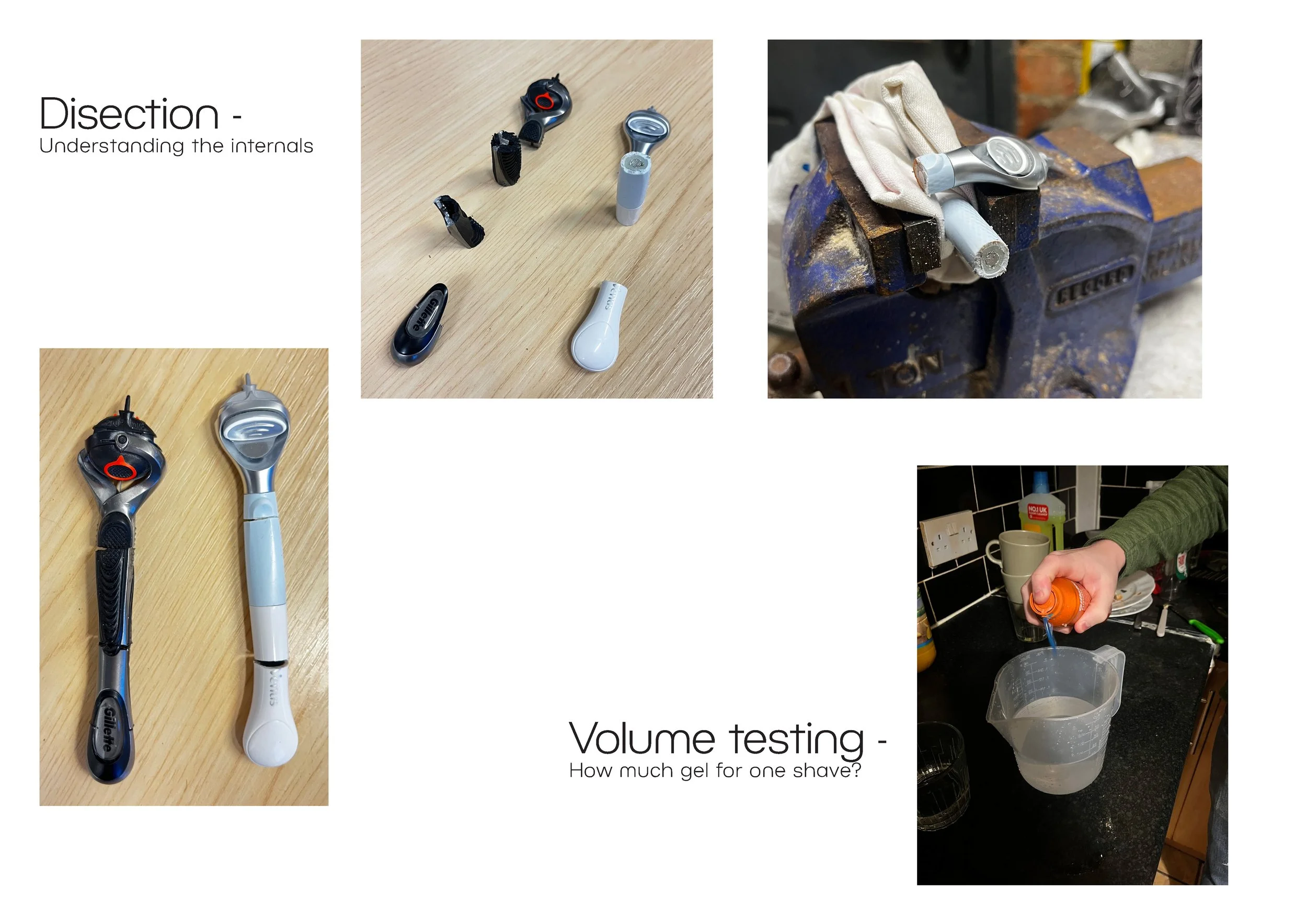
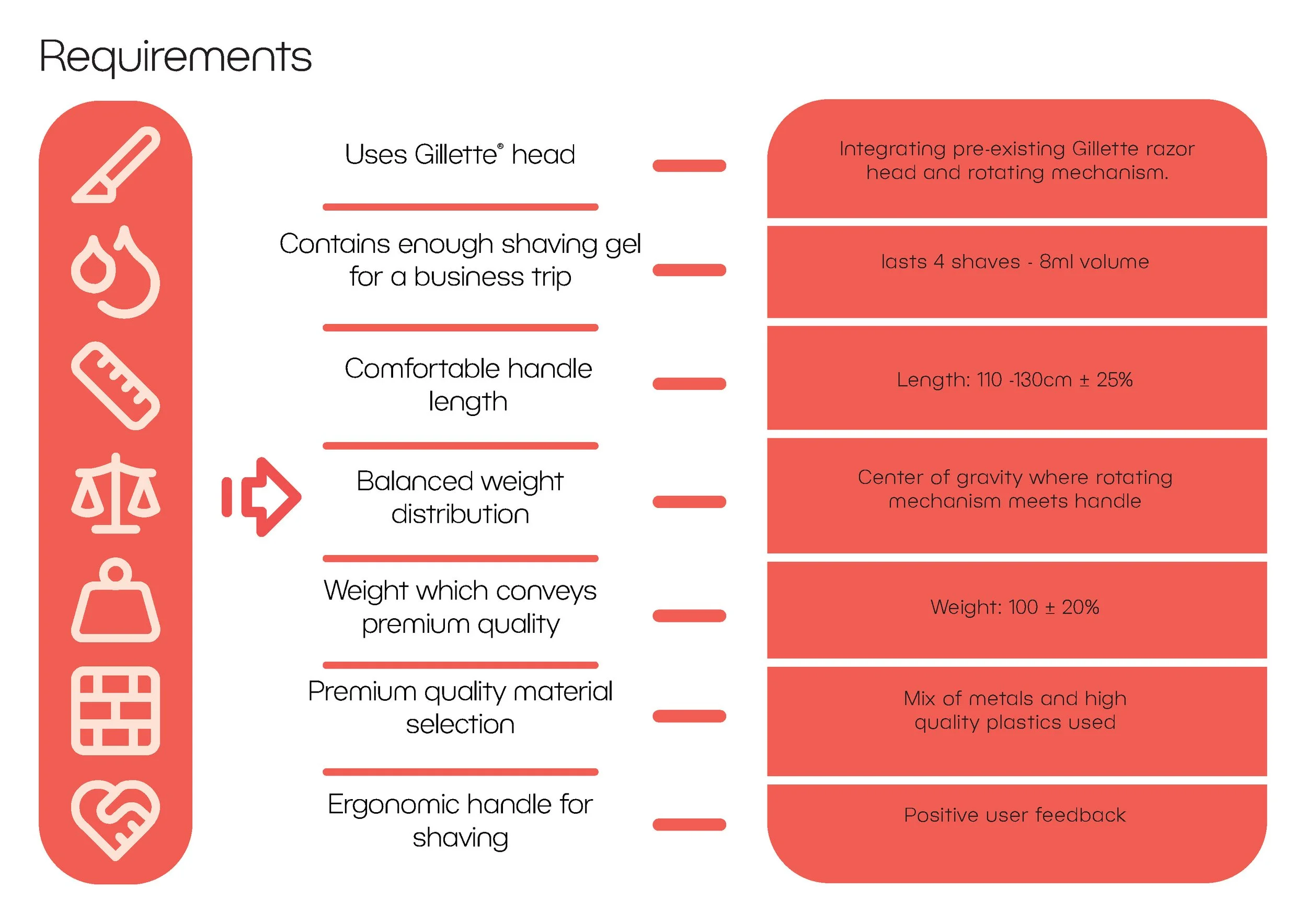
Research was translated into clearer product requirements around gel volume, handle length, weight, balance, material quality, ergonomics, and compatibility with an existing Gillette head and rotating mechanism.
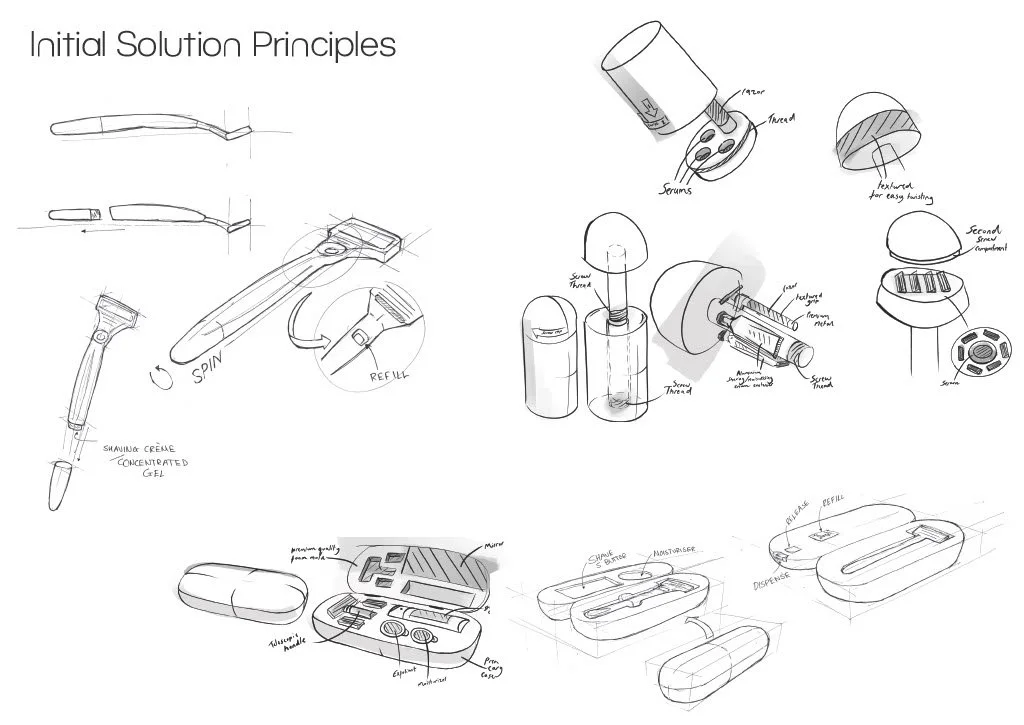
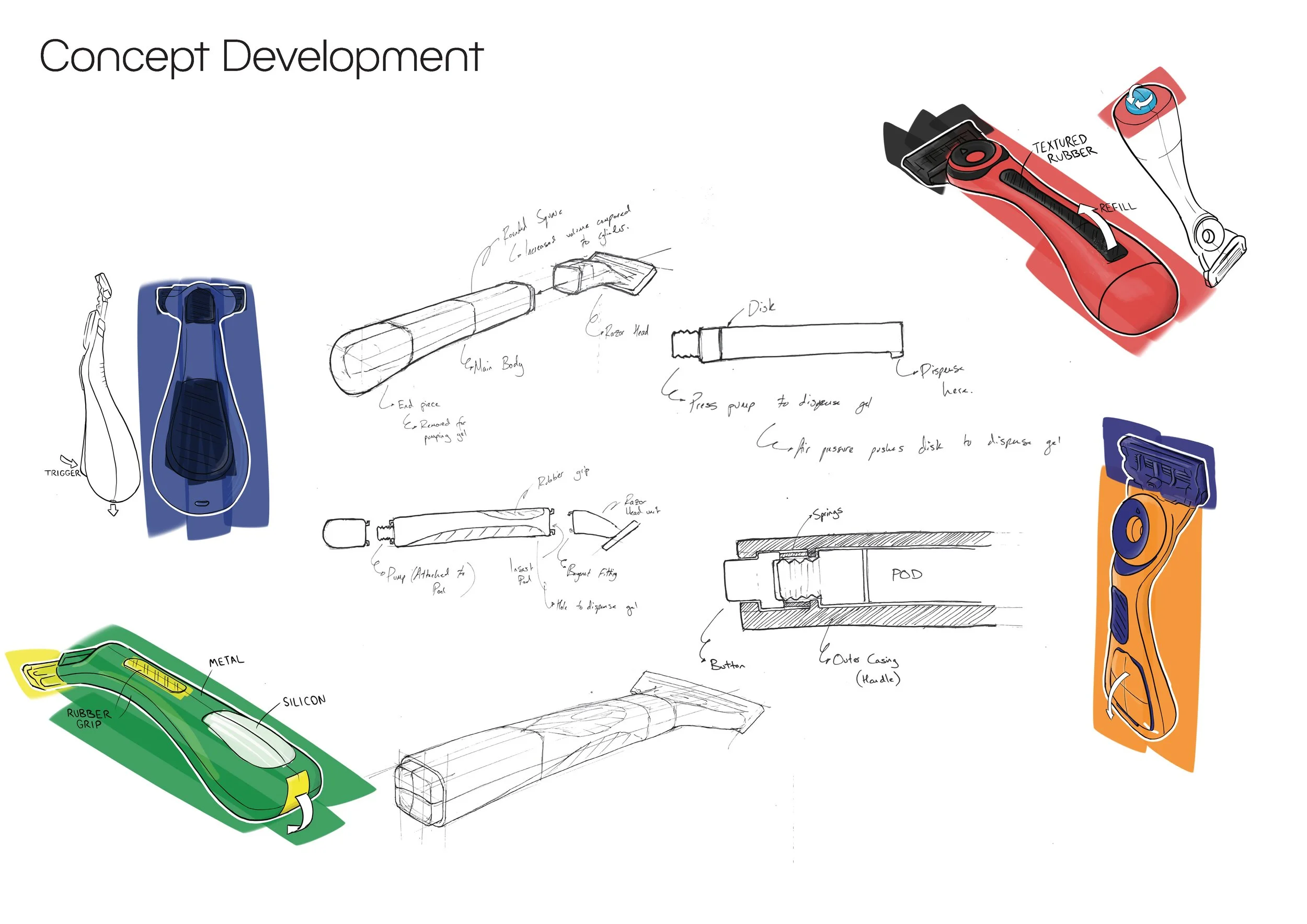
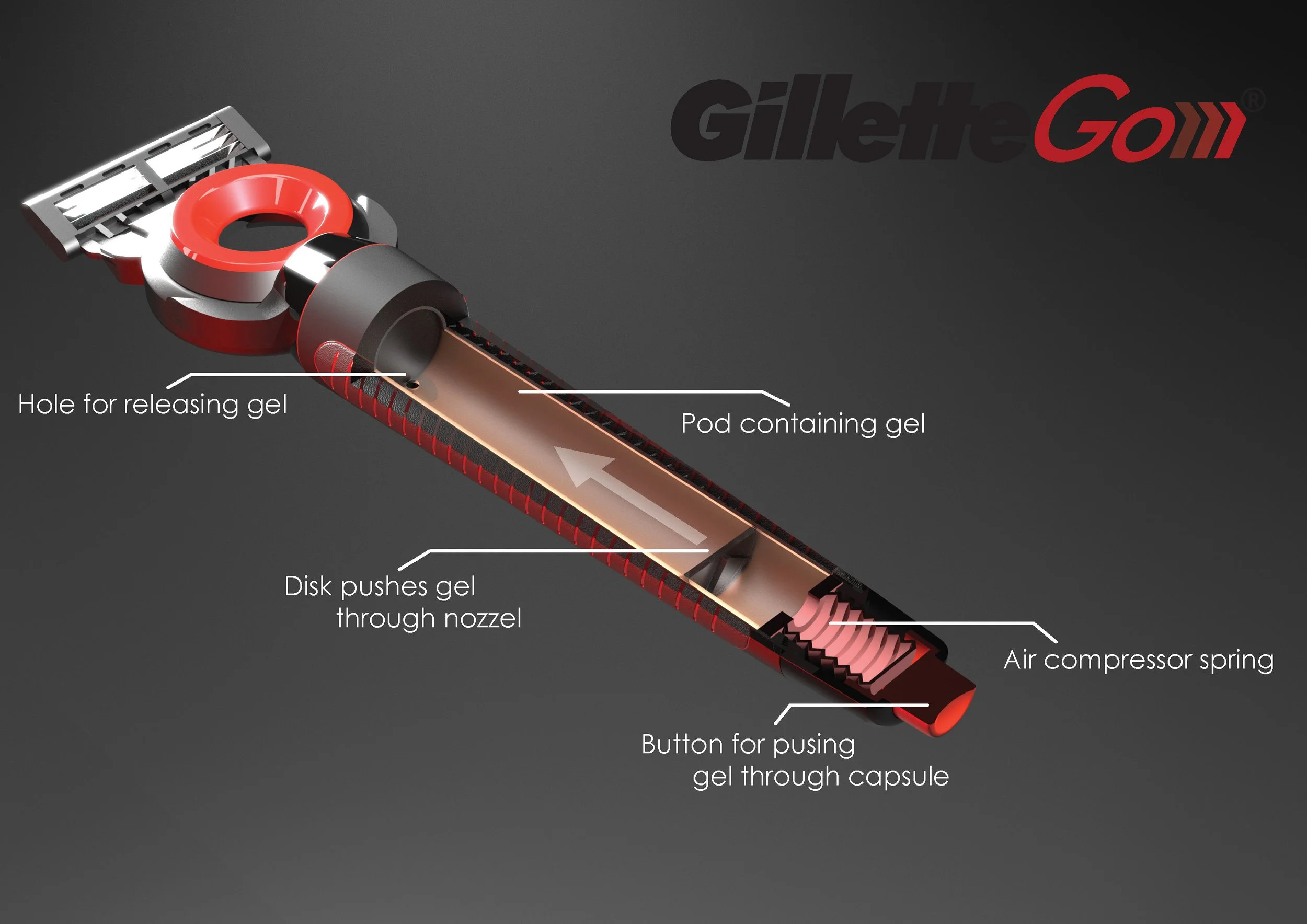
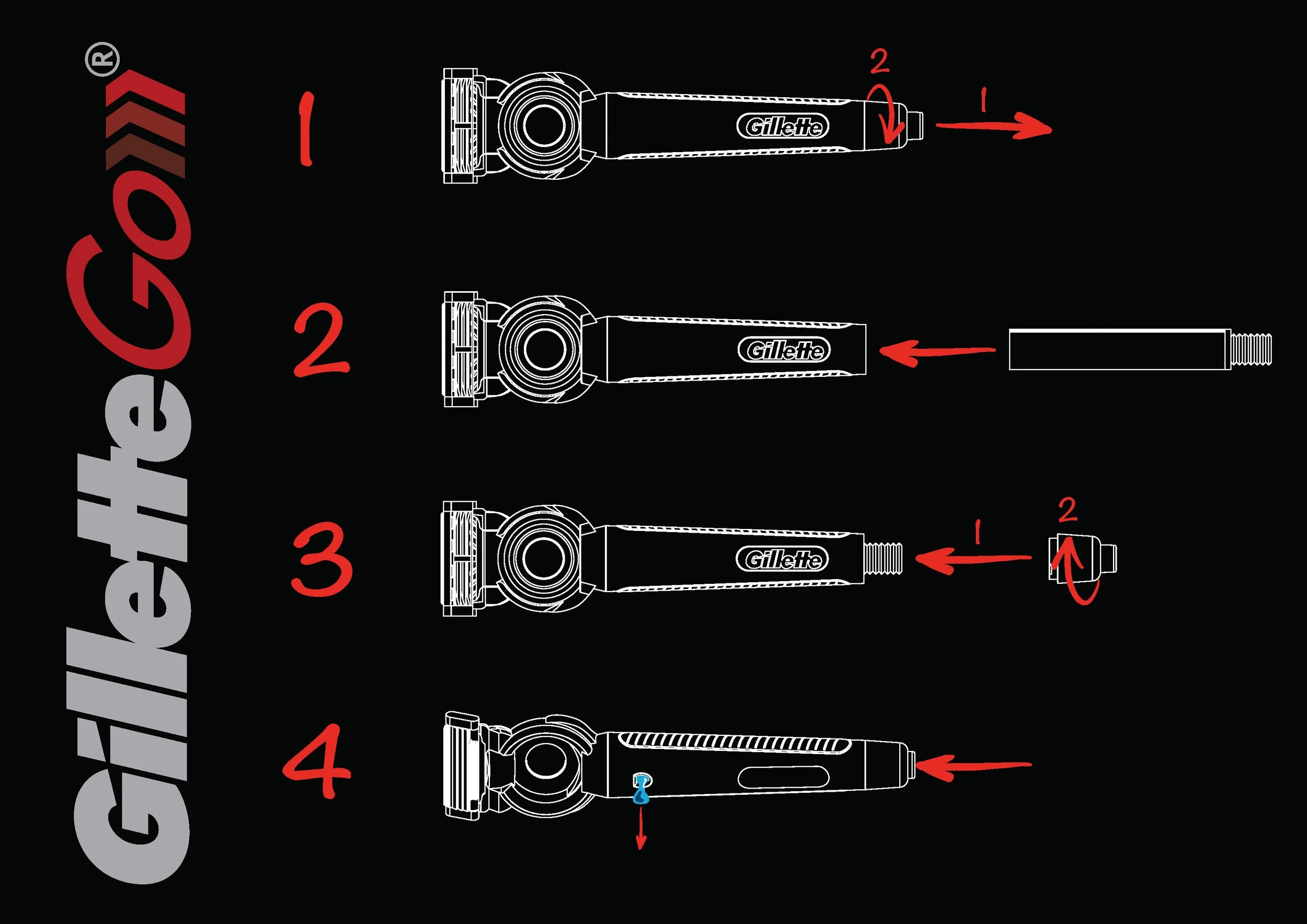
The selected direction was developed into an early product architecture, exploring how the pod, button, spring, nozzle, and razor head system could work together within a compact form. This moved the concept beyond styling towards a more resolved product proposal.
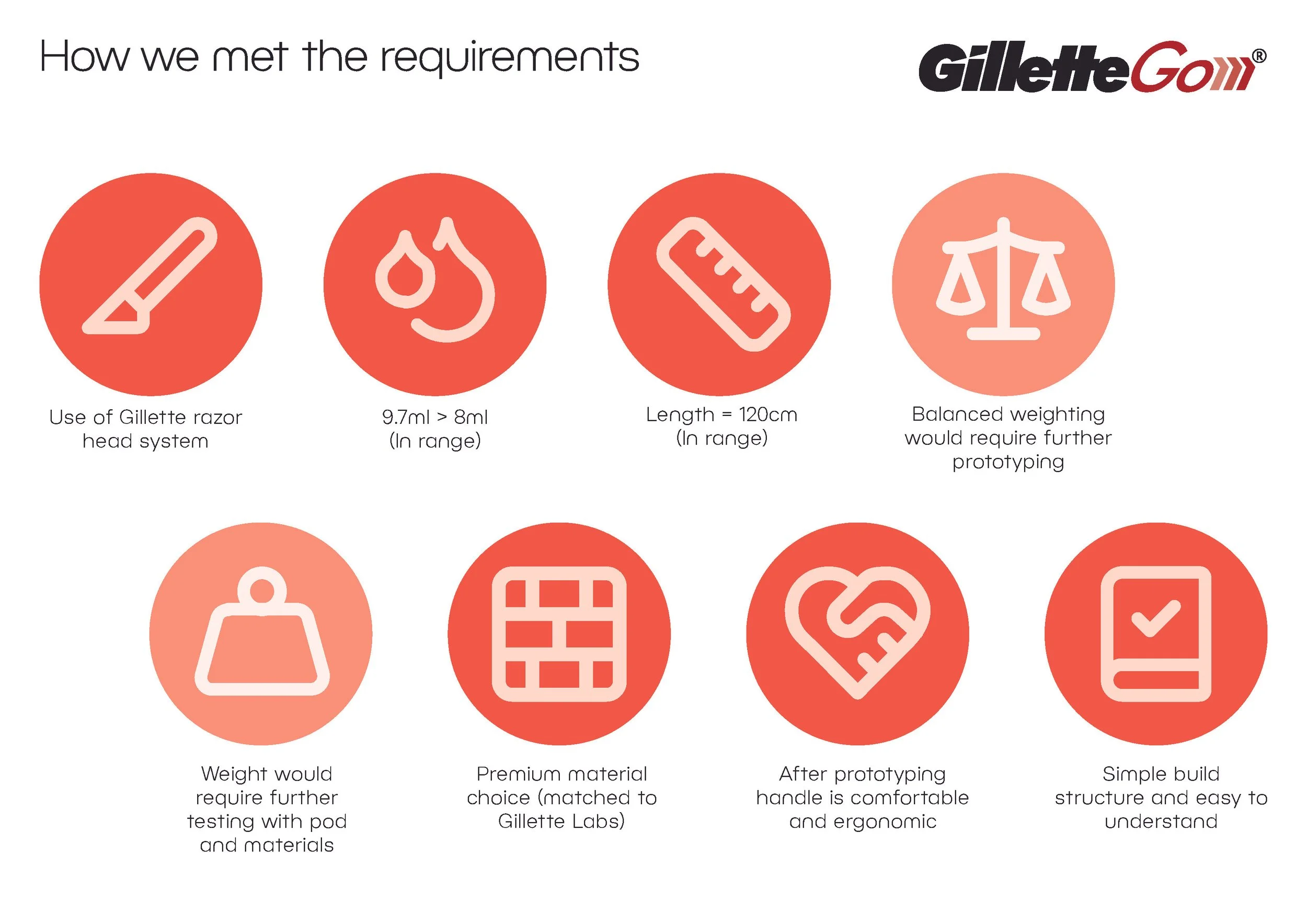
The concept was checked back against the requirements. Some areas were resolved well, including compatibility with the Gillette head system, gel volume, length, material direction, and ergonomic intent. Other areas, particularly balance and final weight, were recognised as needing further prototyping and testing.
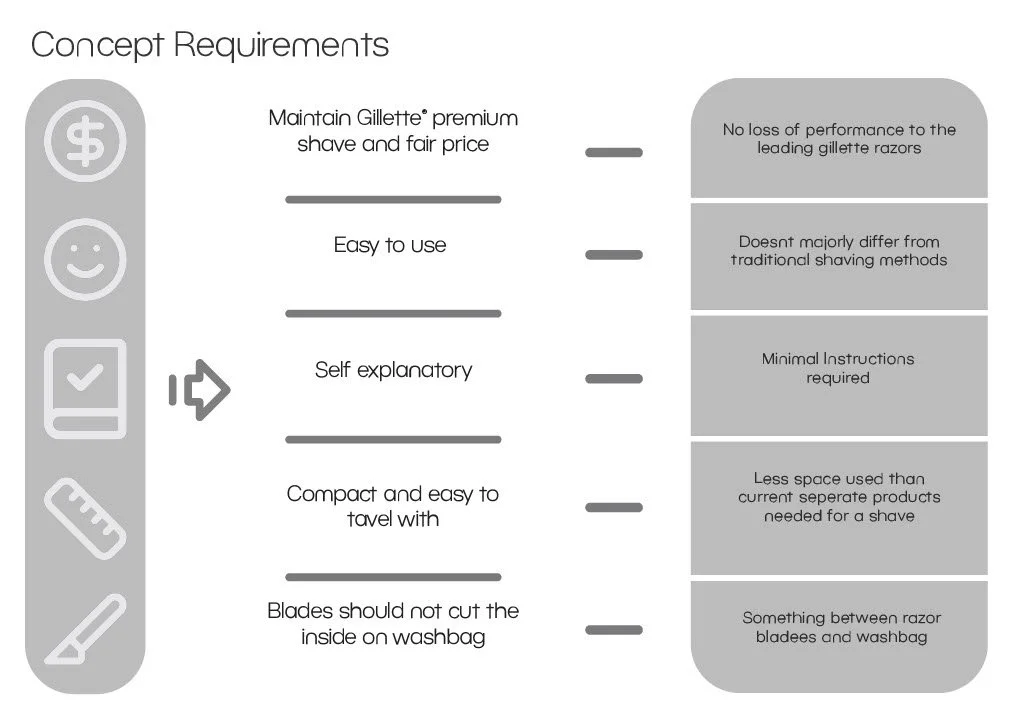
The early concept needed to remain compact, easy to use, self-explanatory, safe to carry, and consistent with the feel and performance of existing Gillette systems. These requirements gave the concept generation stage a clear direction.
Selection and client feedback
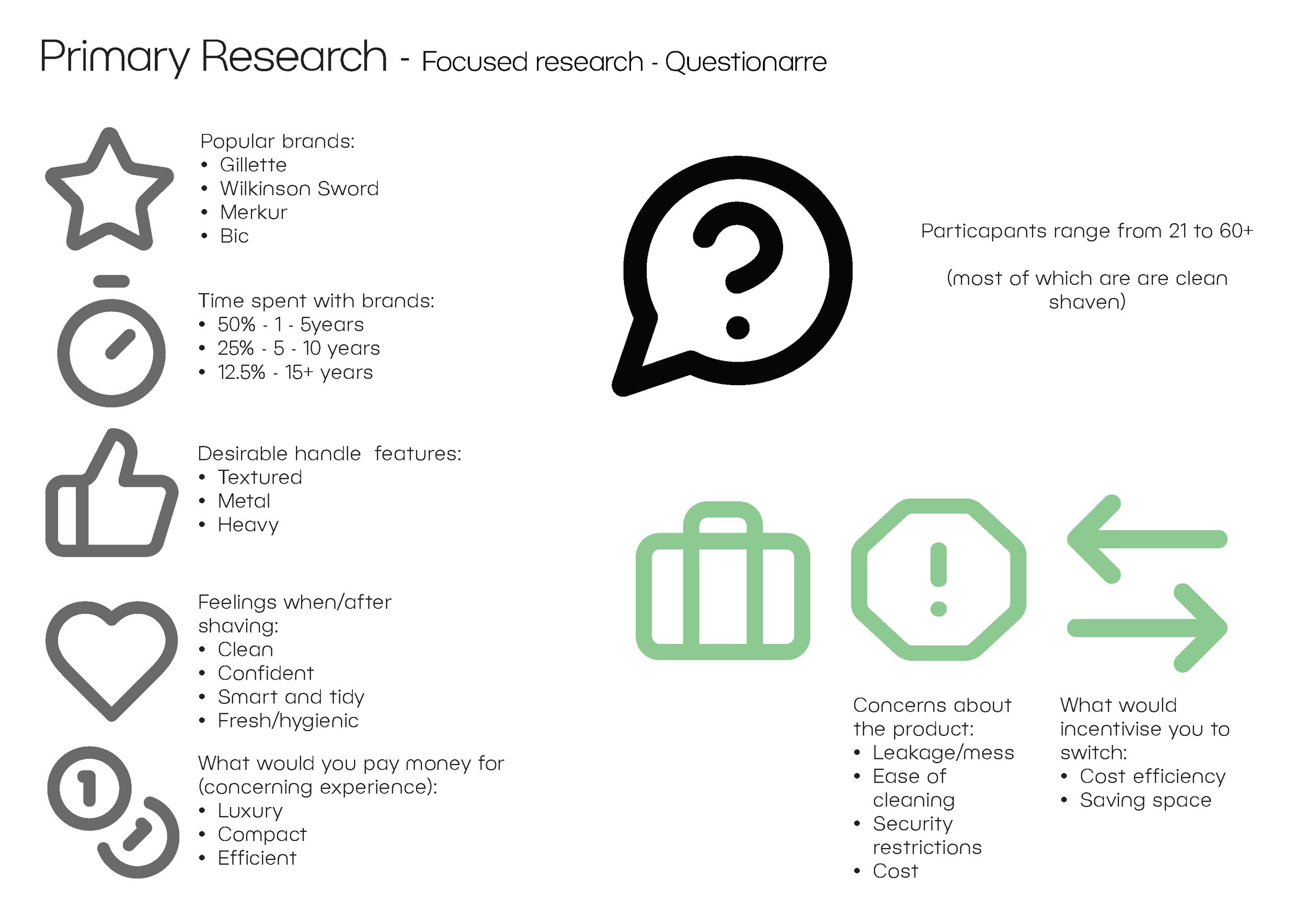
Research and evidence
The project brief
Procter & Gamble set an open brief to develop a product concept that could add value to the business.
The opportunity
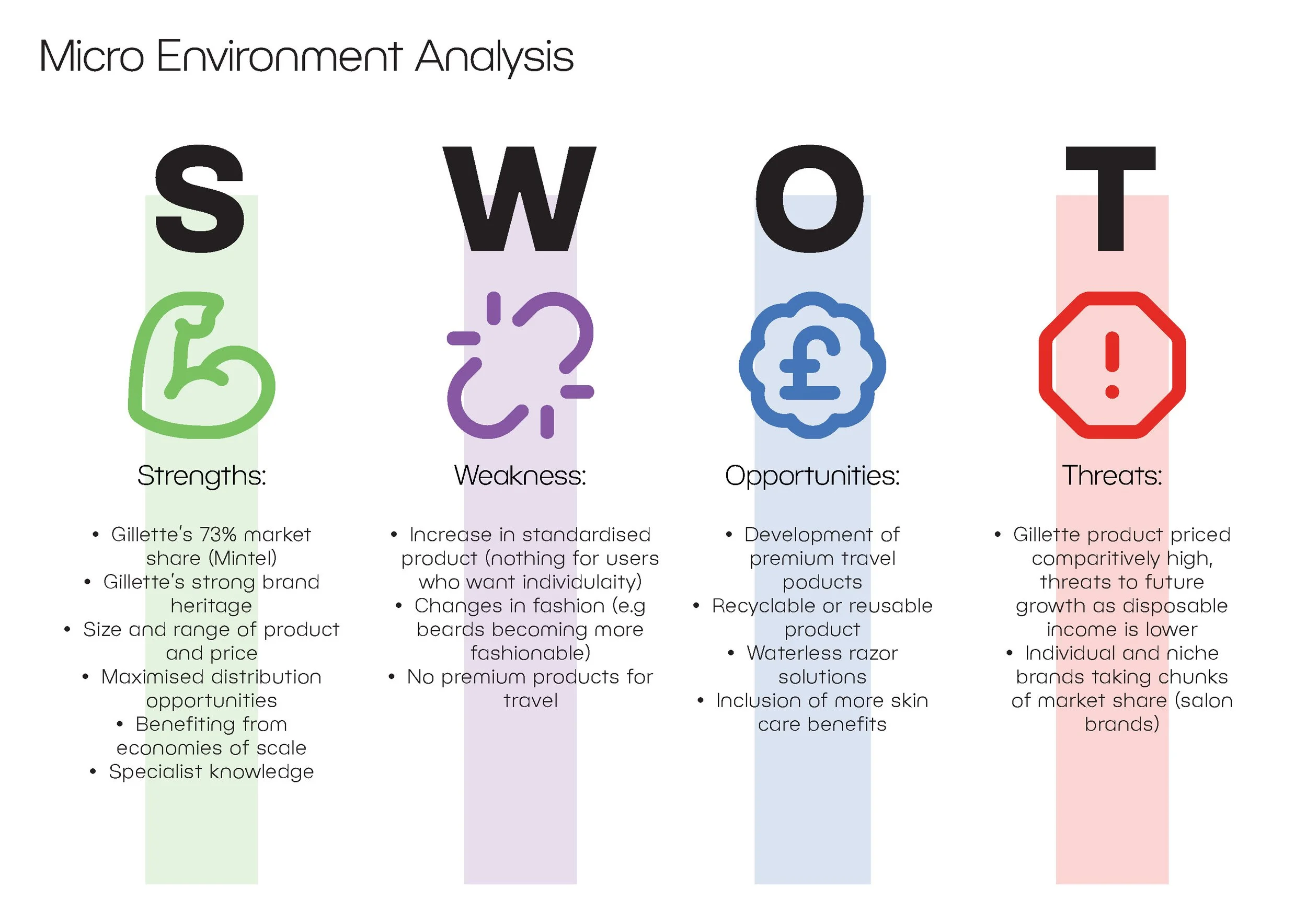
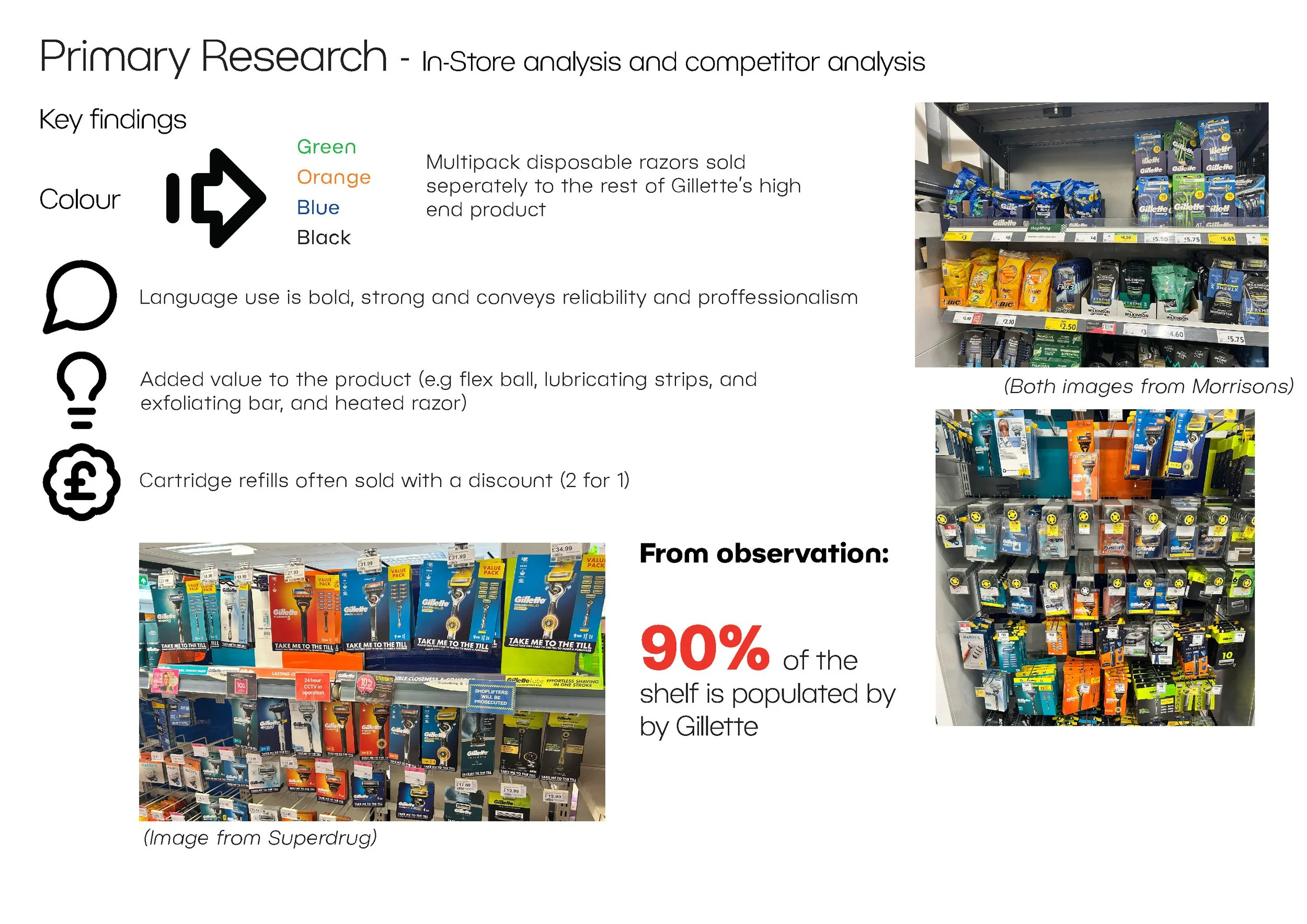
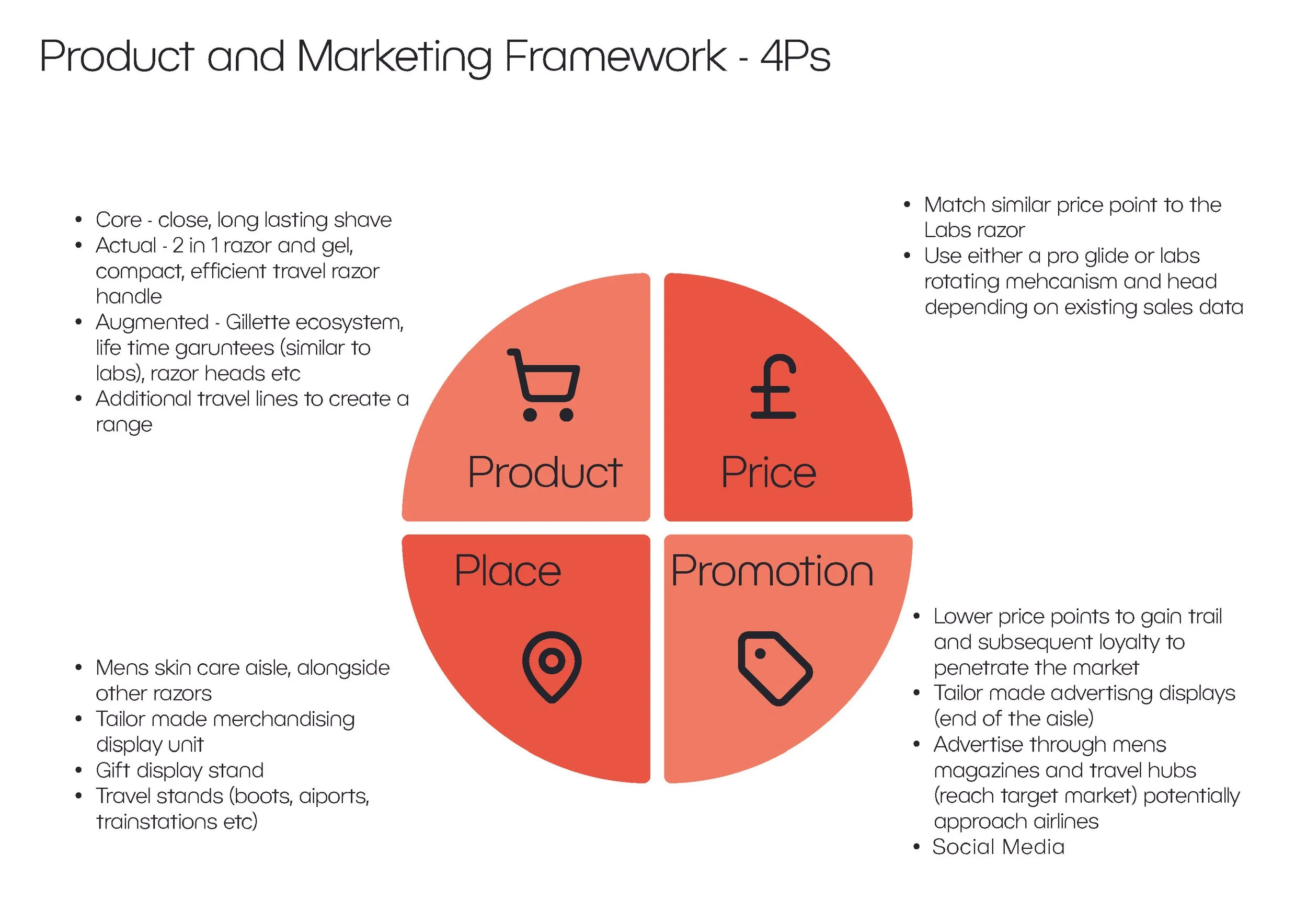
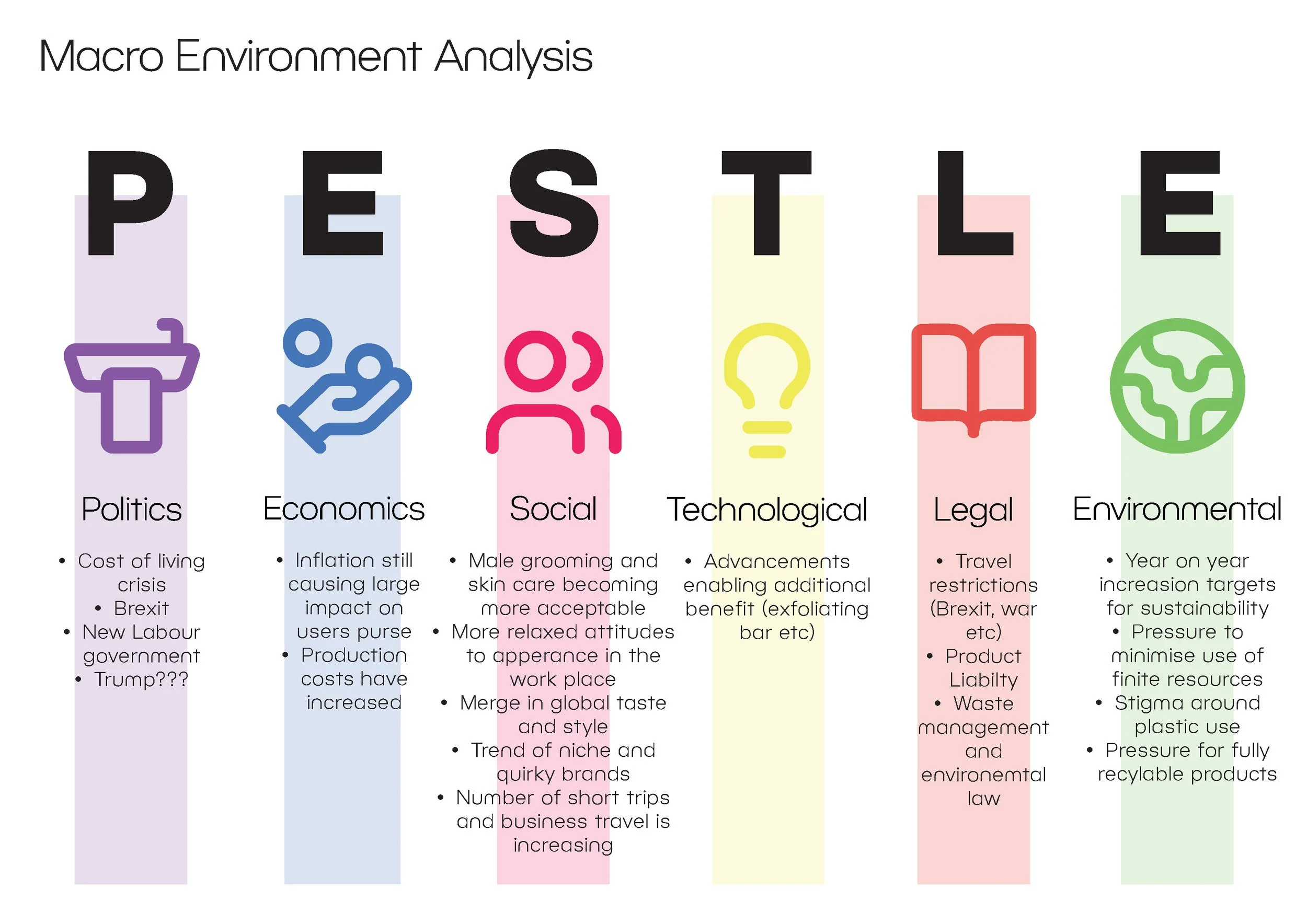
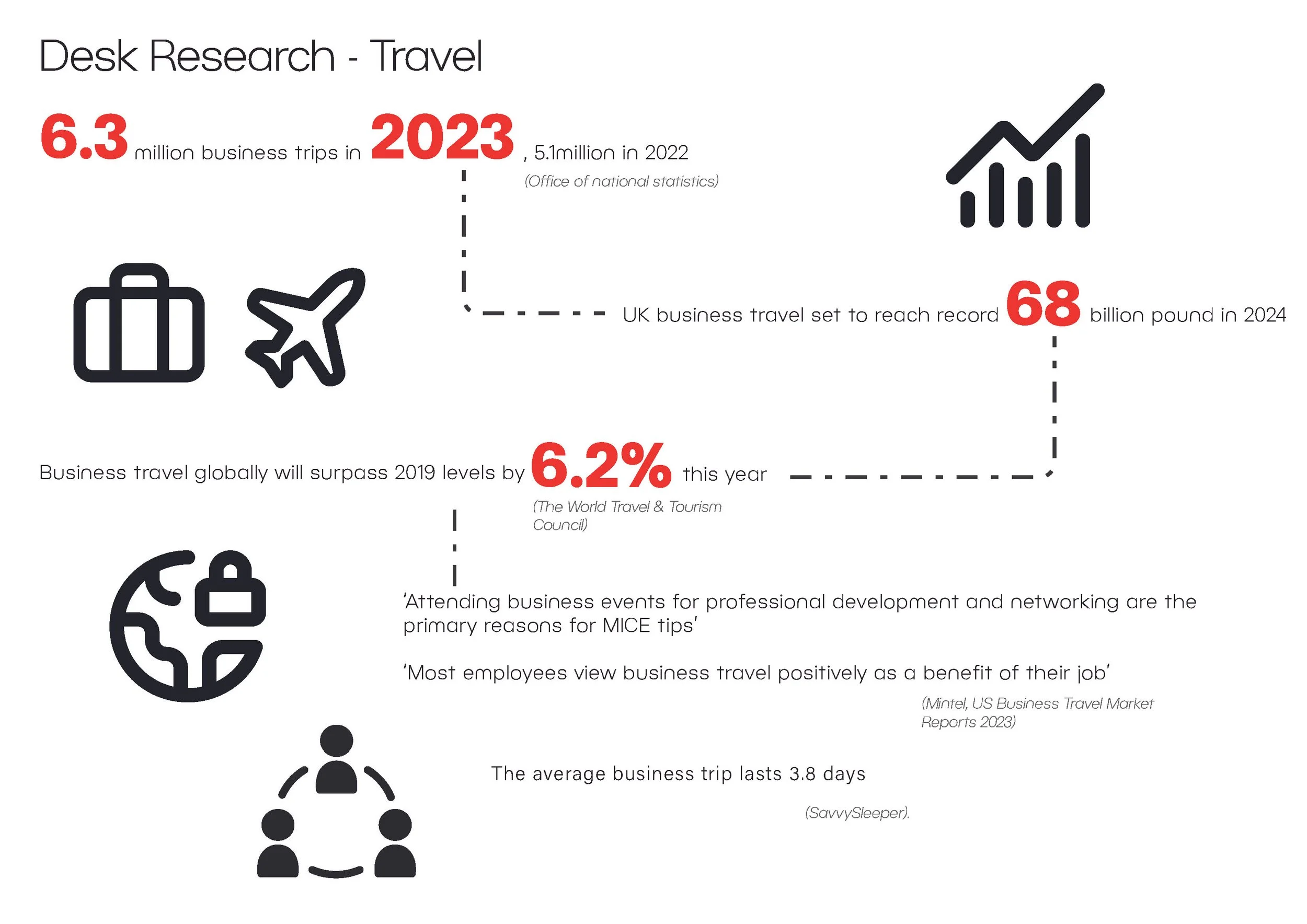
Research suggested a gap in the market: travel was increasing, while Gillette had no clear premium offer for travel. This led us to focus on compact shaving for people who still wanted a high-quality shaving experience away from home.
Defining the problem
How might we create a premium compact travel shaving experience that is easy to carry, easy to use, and more space efficient than carrying separate products?